
Publications
2018
-
, "Developing a novel warning-informative system as a tool for environmental decision-making based on biomonitoring", ECOLOGICAL INDICATORS, Vol. 89, pp. 480-487, Publisher: ELSEVIER SCIENCE BV, WOS:000430760900046, DOI:10.1016/j.ecolind.2018.02.020, 2018, [Article]
2011
-
, "Are Certain Invertebrate Species Sensitive Bioindicators of the Air Pollution?", SURVIVAL AND SUSTAINABILITY: ENVIRONMENTAL CONCERNS IN THE 21ST CENTURY, pp. 1023-1035, Publisher: SPRINGER-VERLAG BERLIN, WOS:000396778200097, DOI:10.1007/978-3-540-95991-5_97, 2011, [Proceedings Paper]
Professional Experience
University Scientific, Management and Business Experience
I am a computer scientist, university professor, researcher, and technology entrepreneur with a life experience in computer architecture, Artificial Intelligence, R&D, technology management, and business development.
Since graduating, I have been active within the Faculty of Electronics at the Polytechnic University at the Polytechnic University of Bucharest, where I taught and conducted research in the fields of computer architecture, digital systems, integrated circuits, and digital technologies. Between 1976 and 1990, I coordinated over 24 national and international research contracts and grants focusing on advanced areas of computer engineering and digital technology.
Pioneering Research in Graphics Processing and AI
Between 1977 and 1990, I led a group of research in Romania- a communist country in Eastern Europe- on dedicated graphics processing, parallel computer architectures, and AI-oriented computing. It was the first in Europe and carried out independently and in parallel with similar research taking place in the USA.
As CEO, I led the Functional Electronics Laboratory (FEL) at the Faculty of Electronics in Bucharest, with Gheorghe M. Ștefan serving as CTO; our research activities led to the development of the DIAGRAM 2030 family of interactive graphics systems, which incorporated a dedicated, parallel, microprogrammed 16-bit graphics processor (1977–1980, al well as a Fourier Processor.
The work was subsequently extended in 1981-1983 to DIALISP, a specialized computer architecture designed to execute AI programs directly in the LISP programming language.
Historical records identify the research underlying the DIAGRAM 2030 family, comprising a parallel multiprocessor graphics system and an AI-oriented machine, as one of the pioneering hardware research efforts worldwide in parallel processing for graphics and artificial intelligence. This work emerged before or contemporaneously with other important developments, including the Stanford Geometry Engine (1981), and research associated with MIT's CADR and Symbolics systems (1981–1983). This research took place at a time when minicomputers and microcomputers lacked dedicated hardware for graphics processing or specialized hardware accelerators for artificial intelligence.
The achievements of FEL—specifically the DIAGRAM 2030 computers, which advanced beyond the research and engineering stages to industrial production (1981–1990) and export (starting in 1983)—are particularly significant, as they demonstrate once again that we were among the global pioneers in the fields of graphics processing and AI.
The system received a Gold Medal at the Plovdiv International Trade Fair in 1983 and was subsequently exported to the German Democratic Republic, where it was used, among other applications, in printed-circuit-board design.
The DIALISP project, developed by a team under my leadership, introduced a specialized architecture for efficient LISP execution and was produced in a small series. The work was subsequently presented in international scientific publications, including at the 1984 ACM Symposium on LISP and Functional Programming.
The following brochures, certificates, and technical documentation associated with the DIAGRAM 2030 system provide direct evidence of our project's complexity and its scientific and economic significance:
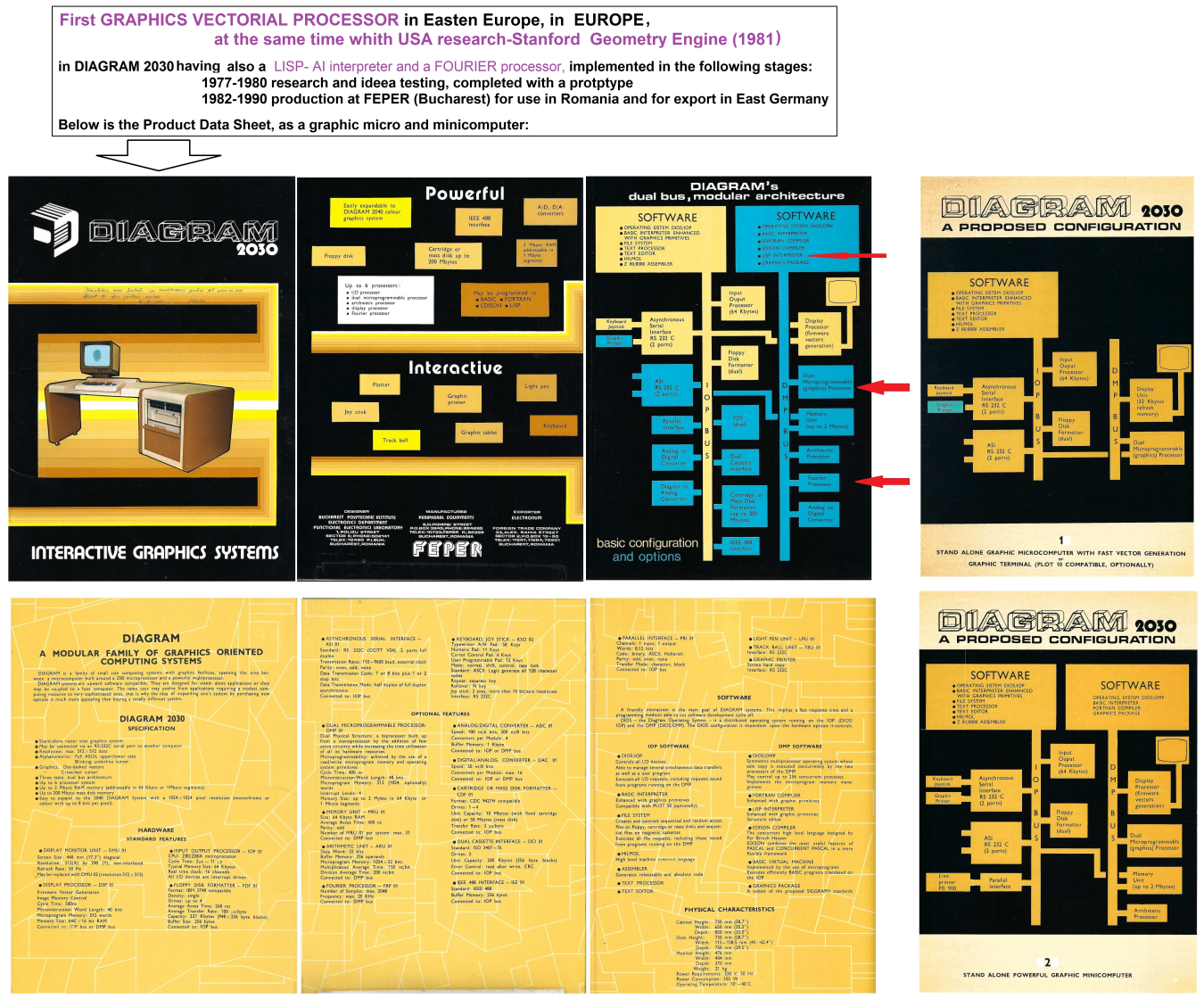
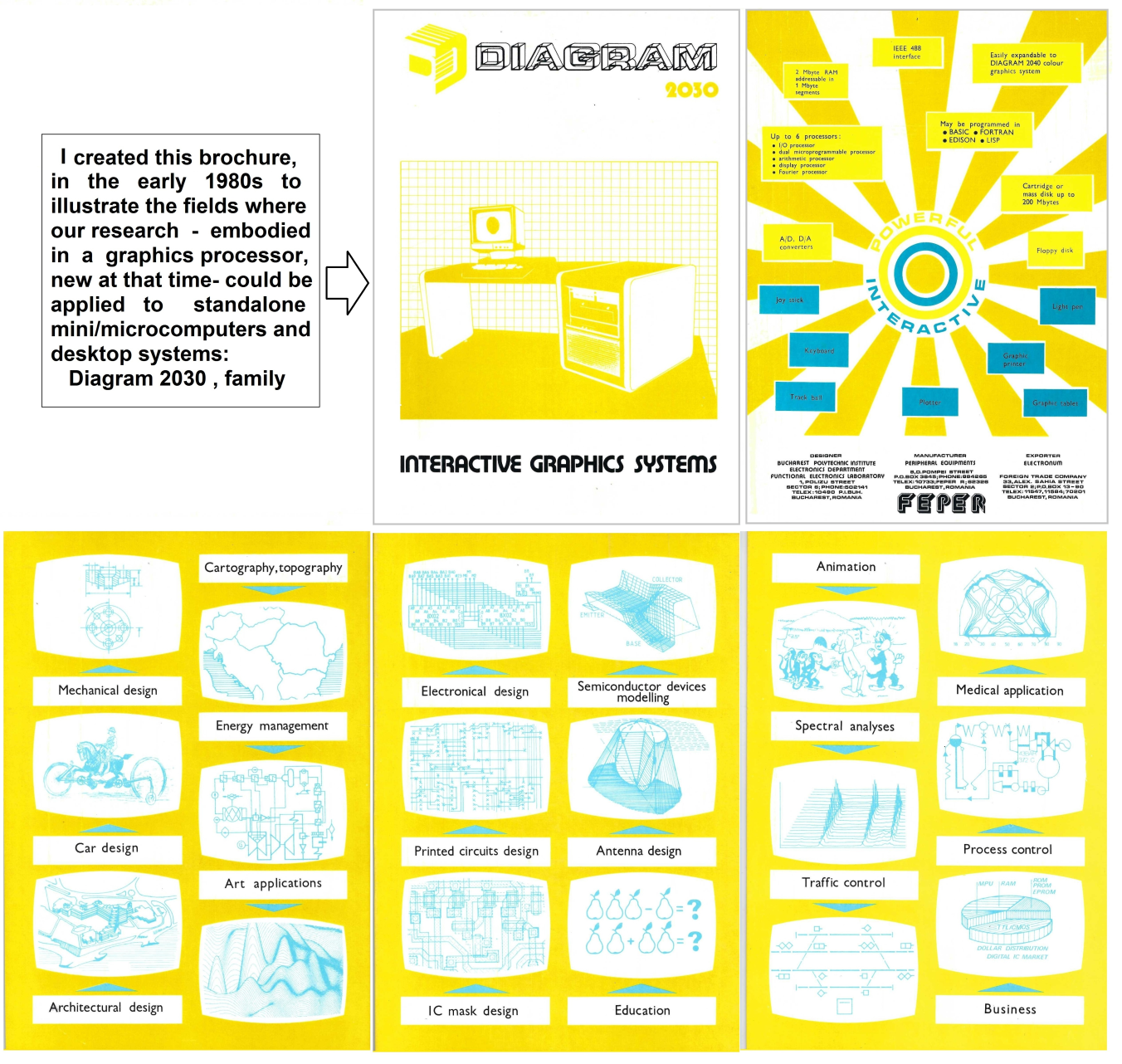
Contemporary DIAGRAM 2030 prospectuses and technical documentation provide direct evidence concerning the system's architecture, graphics-processing capabilities, and applications. These documents are particularly significant from a technology-history perspective because they demonstrate the use of dedicated hardware and parallel processing for interactive graphics and specialized AI computation at a time when the graphics processors&AI architecture had not yet emerged.
The Management in university section outlines the investment stages for our pioneering ideas. Furthermore, it highlights our efforts to introduce interactive graphics and AI—technologies that were cutting-edge at the time—into the national economy.
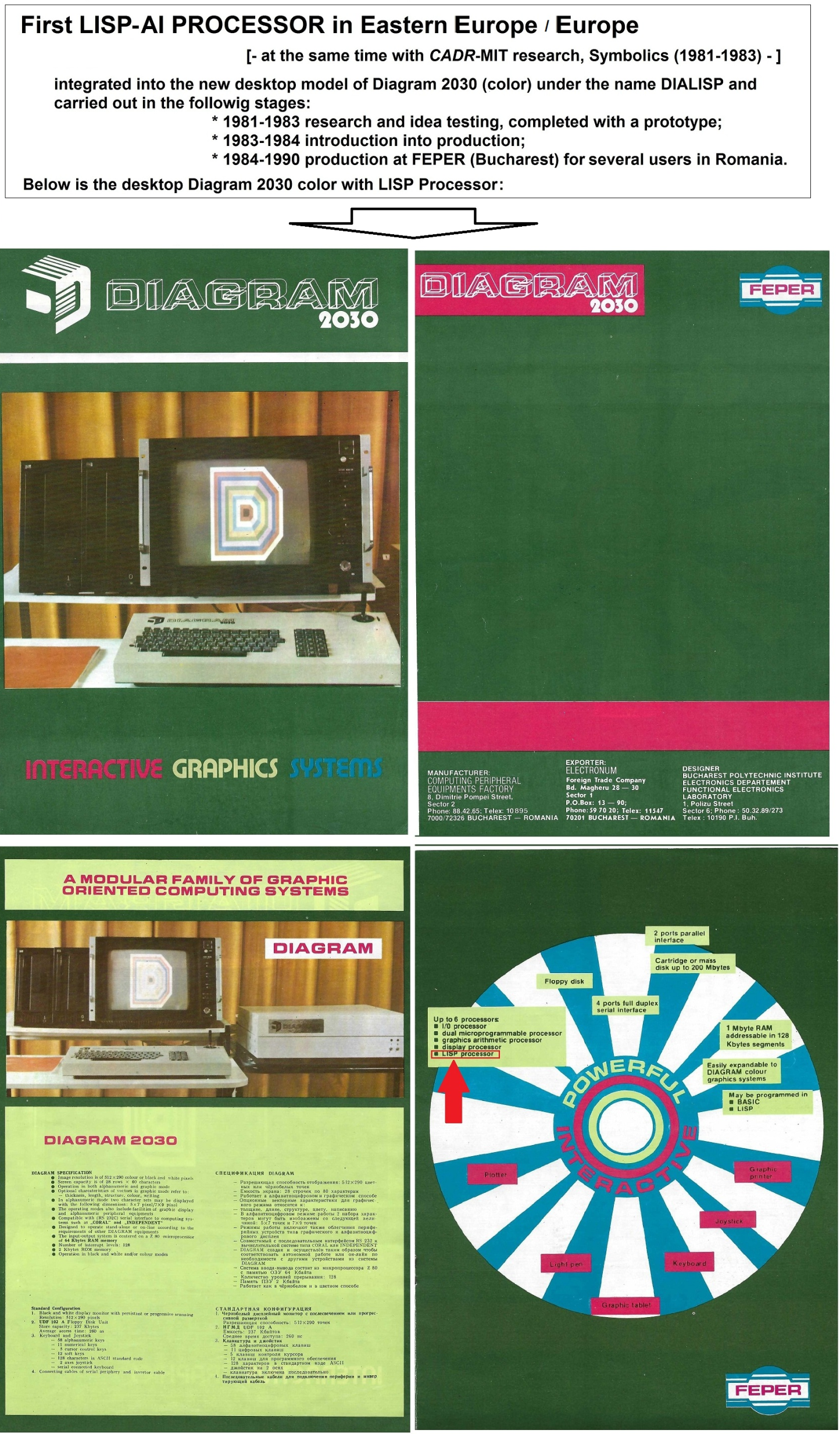
Recognition and Technology Transfer
My technological work has combined fundamental and applied research, computer architecture innovation, patents, scientific publications, international presentations, engineering development, industrial production, technology transfer, and export.
The work has also received formal recognition through awards, diplomas, patents, publications, and other historical documentation, providing evidence of its scientific, technological, and industrial impact.
Taken together, these activities represent a life of continuous involvement in the development and transfer of advanced computer technologies, from computer architecture and dedicated graphics processing to specialized AI computing, research management, and technology entrepreneurship.
Awards
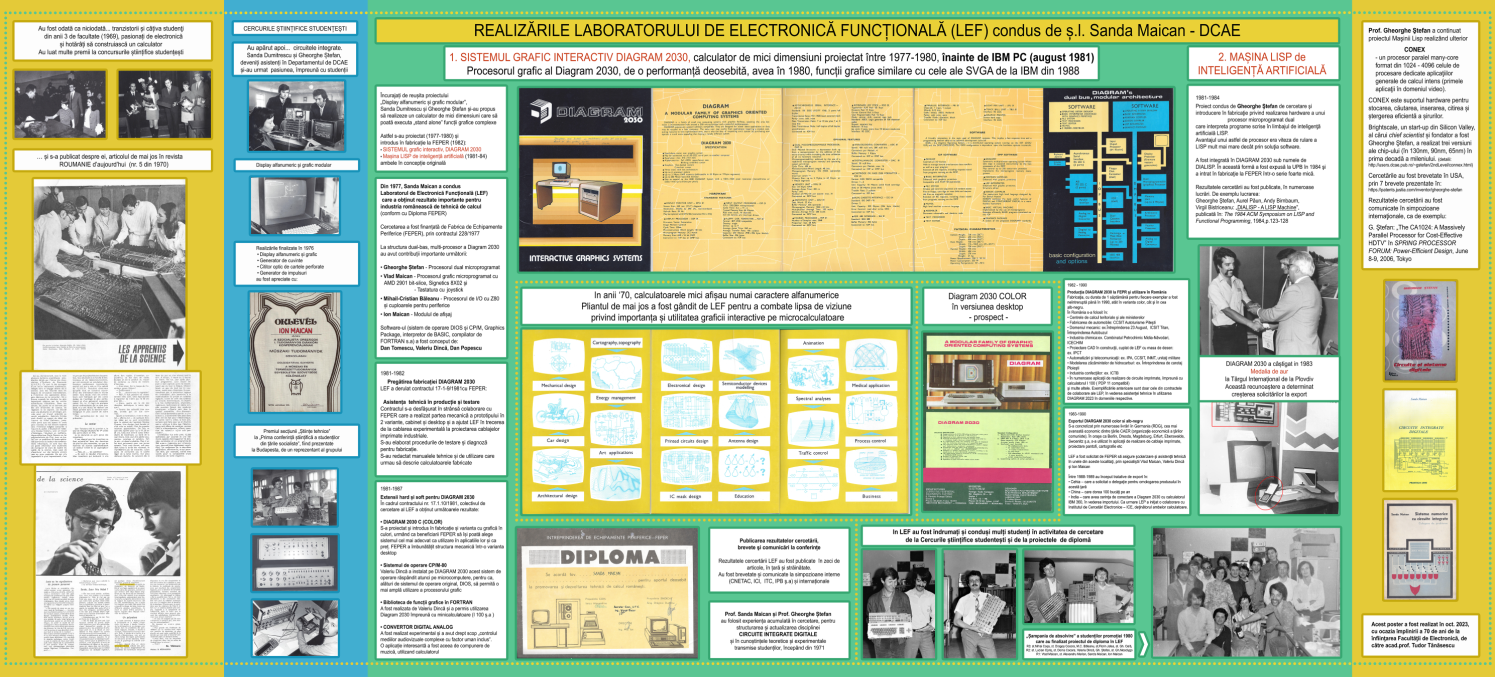
My work, along with that of the Functional Electronics Laboratory, was recognized through a presentation poster created as part of the celebration of 70 years of electronics in Romania in 2023
Academic Activity
Management in university
I donated 25 HP computers, using funds from my private company, System Plus SRL, for students activities at the Digital Integrated Circuits Laboratory of the Faculty of Electronics in Bucharest.
In all the laboratories where I previously worked, I handled the procurement of equipment and additional materials required for operations, using funds from the Polytechnic University of Bucharest.
At Polytechnic University of Bucharest , I manage the acceptance, distribution, and installation of IBM PC’s networks as part of the Ministry of Education and Science's projet to equip universites with computing technology.
I led the team that assisted the Peripheral Equipment Factory (FEPER) with the manufacturing and export of the DIAGRAM family of graphics computers.
Grants&Contracts managed within the university
for integrating the graphics processor and artificial intelligence
from Diagram 2030 into user applications
Romanian Academy Grant: Model and simulator for the control of complex audio-visual environments incorporating the human factor. Contract 434/97 UPB.
Grant from the Ministry of Machine Building and Transport (MCT): Modelling, simulation, and design of a system of devices for controlling the self-organization of complex audio-visual environments involving the human factor. Contract 433/97 UPB
Contract with the Ministry of Education and Science: Parallel processing architectures in Diagram 2030 C
Contract with the Bacău Territorial Computing Centre: Using the CP/M-compatible Diagram 2030C system to enhance computing power and versatility.
Contract with the National Institute of Mechanics and Technologies (INMT): Electronic system with Diagram 2030 for the automatic determination of the combustion characteristics of heavy fuels.
Technical support for usage and training regarding Diagram 2030 in East Germany—specifically, and frequently, in Berlin, Dresden, Magdeburg, Erfurt, Rostock, and Eberswalde.
Contract with the Scientific Research and Technological Engineering Center (CCSIT): Graphics system Diagram 2030C for the design of telecommunications equipment .
Contract with the Autobuzul Enterprise: Using the Diagram 2030C system for the design of mechanical components for machine tools.
Contract with the Ploiestil Logging Enterprise: Diagram 2030 for Hydrocarbon reservoir modeling system using well logging.
Contract with the Institute for Research and Experimentation in Chemistry (ICECHIM): Applications of the Diagram 2030 to increase the computing power required for chemical kinetics.
Contract with the Institute for Design and Research in Standardized Construction (IPCT): Interfacing the Diagram 2030 with peripheral equipment—the Scamp plotter and the drafting table.
Contract with the Institute for Design and Research in Standardized Construction (IPCT): Applications of Diagram 2030 for Computer-Aided Design in construction.
Contract with the Institute for Scientific Research and Technological Engineering (ICSIT) Titan: Interfacing the Diagram 2030 with the I_100 computer and graphic peripherals for CAD in the mechanical engineering field.
Contract with the Institute for Computing Technology (ITC): Diagram 2030C for applications in the garment industry.
Contract with CCSIT Autoturisme Pitești: Data transfer program between the CE 300 chart reader and Diagram 2030C
Contract with the Institute for Design and Automation (IPA): Transmission of image files from Diagram 2030 to the I_102 computer .
Contract with the Computing Center of the Ministry of Electro technical Industry and Technology (MIET): Software development using the graphical function of Diagram 2030.
Contract with the Institute for Scientific Research and Technological Engineering (ICSIT): Programs for improving computational performance using Diagram 2030C
Contract with the 23 August Enterprise: Configuration of the Diagram 2030 system for industrial applications. Software training.
Contract with the Water Crișuri Directorate - Oradea: Diagram 2030 to enhance user performance.
The FEPER investment resulting from the achievements of the research team in the field of interactive graphics, previously funded by the Polytechnic University of Bucharest
Contract 17-1-10/1980 with FEPER: Technical assistance in production and testing. Hardware and software extensions for the Diagram 2030 and 2030C systems to ensure compatibility with the client's software.
Contract 17-1-9/1980 with FEPER: DIAGRAM 2030 COLOR and LISP PROCESSOR
Contract 228/1977 with FEPER: Modular alphanumeric and graphic computer – the contract that secured funding for the Functional Electronics Laboratory to develop the manufacturable prototype of the Diagram 2030 Black&White.
Teachnig experience ( din 1971)
In Politehnica University of Bucharest (PUB), Faculty of Electronics, Telecommunications and Information Technology (ETTI}, Department of Electronic Devices, Circuits and Architectures (EDCA)
Courses, seminars, projects, and laboratories for the following subjects:
- Computer System Architecture,
- Digital Integrated Circuits,
- Computer Design,
- Computers,
- Electronic Measurement and Control Instruments,
- Amplifiers,
- Electronic Devices and Circuits.
Text Books / Curriculum Materials
Sanda Maican, Gh. Stefan Culegere de probleme de circuite integrate digitale,
IPB Press, 1979
M. Bodea, I. Mihut, M. Hancu, Sanda Dumitrescu (Maican), Gh. Stefan “Indrumar de laborator de Aparate Electronice de Masura si Control”- Ed. IPB, 1977, 65 pag
Sanda Dumitrescu ( Maican), Gh. Stefan: Circuite integrate digitale - Indrumar de laborator,
IPB Press, 1976.
Supervisor of student scientific research and bachelor's theses
I began my scientific research in IT hardware during my second year as a student at the Faculty of Electronics in Bucharest. My work has been well-regarded and recognized with awards.


After graduation, upon beginning my career at the same faculty, I led, guided, and supervised numerous students in scientific research.
Among these, I would particularly highlight the projects completed in 1976, which won international awards and introduced the first concepts of vector graphics processing—alongside devices such as the word generator and the pulse generator.
Together with my colleague Gheorghe M. Stefan with these graduates and students from several subsequent generations, we developed the Diagram 2030 family of systems, implementing pioneering ideas regarding graphics processors and LISP AI processors(1977-1980).